March 31, 20263 min read
Tired, Gritty Eyes? Let's Make Sense of Dry Eye
Here is the simplest way I explain it. Your eyes are covered by a thin layer of tears called the tear film, a bit like the fluid on a clean windshield. When that film is healthy, your eyes feel comfortable and your vision is sharp. When it breaks down or dries too fast, your eyes feel gritty, watery, or burn.
This guide is for anyone bothered by these symptoms, especially if you spend long hours on screens, wear contact lenses, or live in a dry, air-conditioned climate like ours in Dubai. I will walk you through why it happens and, just as importantly, what genuinely helps.
Your Tears Are Not Just Water
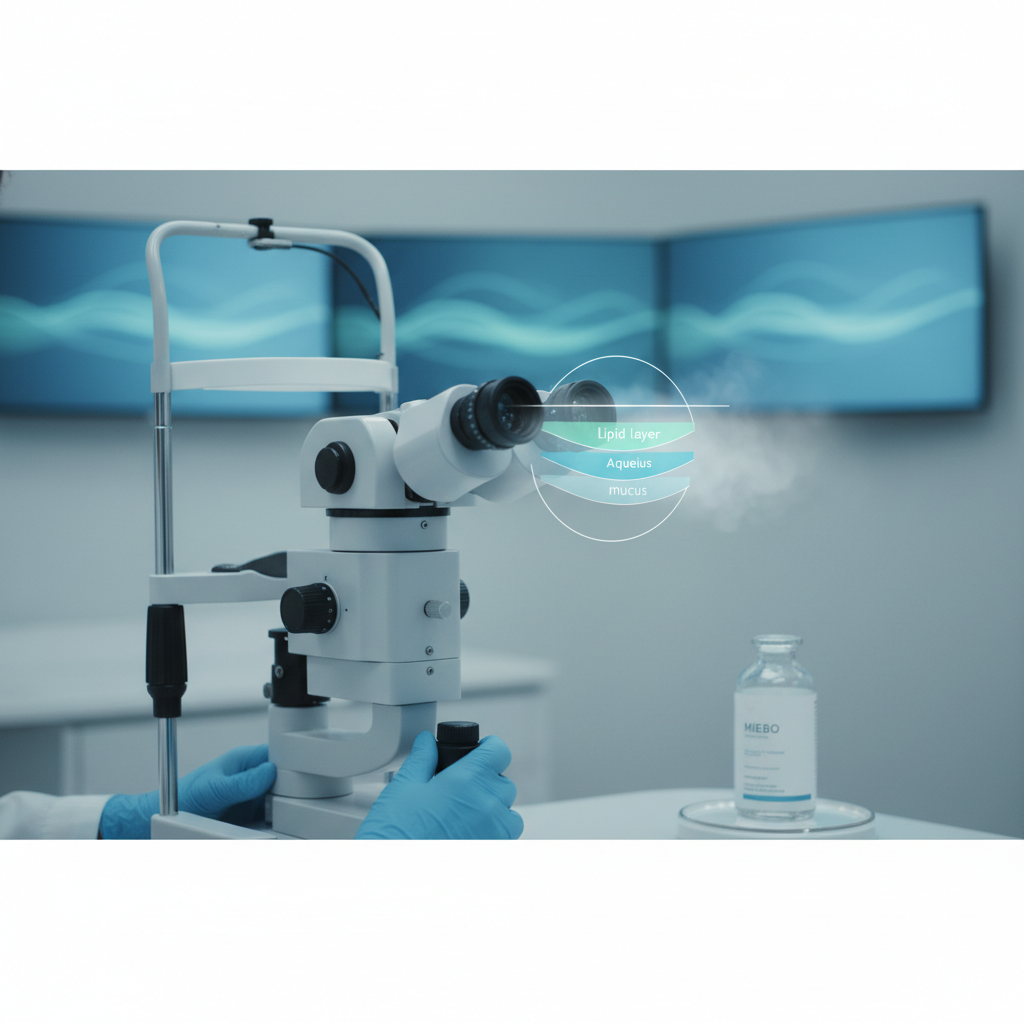
Your tears have three working layers, each with a job. The oily (lipid) layer sits on top and slows evaporation, like a lid on a glass of water. It is made by tiny glands along your eyelid margins called meibomian glands. The watery (aqueous) layer is the thick middle layer that washes and nourishes the surface. The mucin layer underneath helps the tears spread evenly and stick to the eye. Here is the surprising part: most dry eye is not from making too few tears. In the majority of patients I assess, the problem is poor quality tears that evaporate too quickly, usually because those oily glands are blocked or sluggish. That distinction changes the whole treatment plan.
Why Eyes Dry Out: The Two Main Types
Evaporative dry eye is the most common. The oily top layer is weak or unstable, often because the meibomian glands (the eyelid oil glands) are clogged. This condition is called meibomian gland dysfunction, or MGD. Without a good oily lid, the watery tears evaporate too fast and the eye dries out between blinks.
Aqueous-deficient dry eye is less common. Here the eye simply does not produce enough of the watery layer, sometimes linked to age, certain medications, or autoimmune conditions.
Working out which pattern you have, and how severe it is, is exactly what a proper eye assessment is for. The treatment that helps one type may do little for the other.
Where Newer Surface Drops Fit In
For some patients whose eyes keep evaporating despite the basics, a newer eye drop containing perfluorohexyloctane (brand name MIEBO) can help. It works by forming a thin anti-evaporative film on the surface of the eye that slows tears from drying out. One important correction I often make: this drop does not replace or rebuild your eyes' natural oily layer. It does not restore the oil your glands make. It sits on the surface as a protective shield against evaporation. That is a real benefit for the right patient, but it is one tool among several, and it does not replace treating the underlying gland problem.
When to Seek Urgent Care or Call Us
Dry eye is usually a comfort problem, not an emergency. But some symptoms are not ordinary dry eye and need prompt attention. Please contact us promptly or seek urgent eye care if you notice: - Sudden or significant loss of vision, or a sudden increase in blurring that does not clear with blinking - Marked eye pain (not just grittiness) - Strong light sensitivity, or a feeling that something is stuck in the eye that will not go - Significant redness, especially with discharge or after an injury - A red, painful eye in someone who wears contact lenses - Symptoms that keep worsening despite the steps in this guide If in doubt, it is always safer to have the eye looked at. You can book to see me at Spanish Center Dubai, and for the warning signs above, do not wait for a routine slot.
Let's Find What Is Right for Your Eyes
Dry eye is common, very treatable, and rarely needs the strongest option first. The key is matching the treatment to your specific cause, which is exactly what a proper assessment does. Not every product suits every patient, and the examination is what decides the plan. If your eyes have been bothering you, I would be glad to take a proper look. Book a consultation with me, Dr. Tamer Salem, at Spanish Center Dubai, and we will work out a clear, step-by-step plan together.